
Evacuate Yourselves
On the night of 5–6 July 2026, Russia launched one of the largest attacks on Kyiv since the war began. I spent it in a hotel basement in Podil, following drone trajectories on one browser tab and a World Cup score on the other

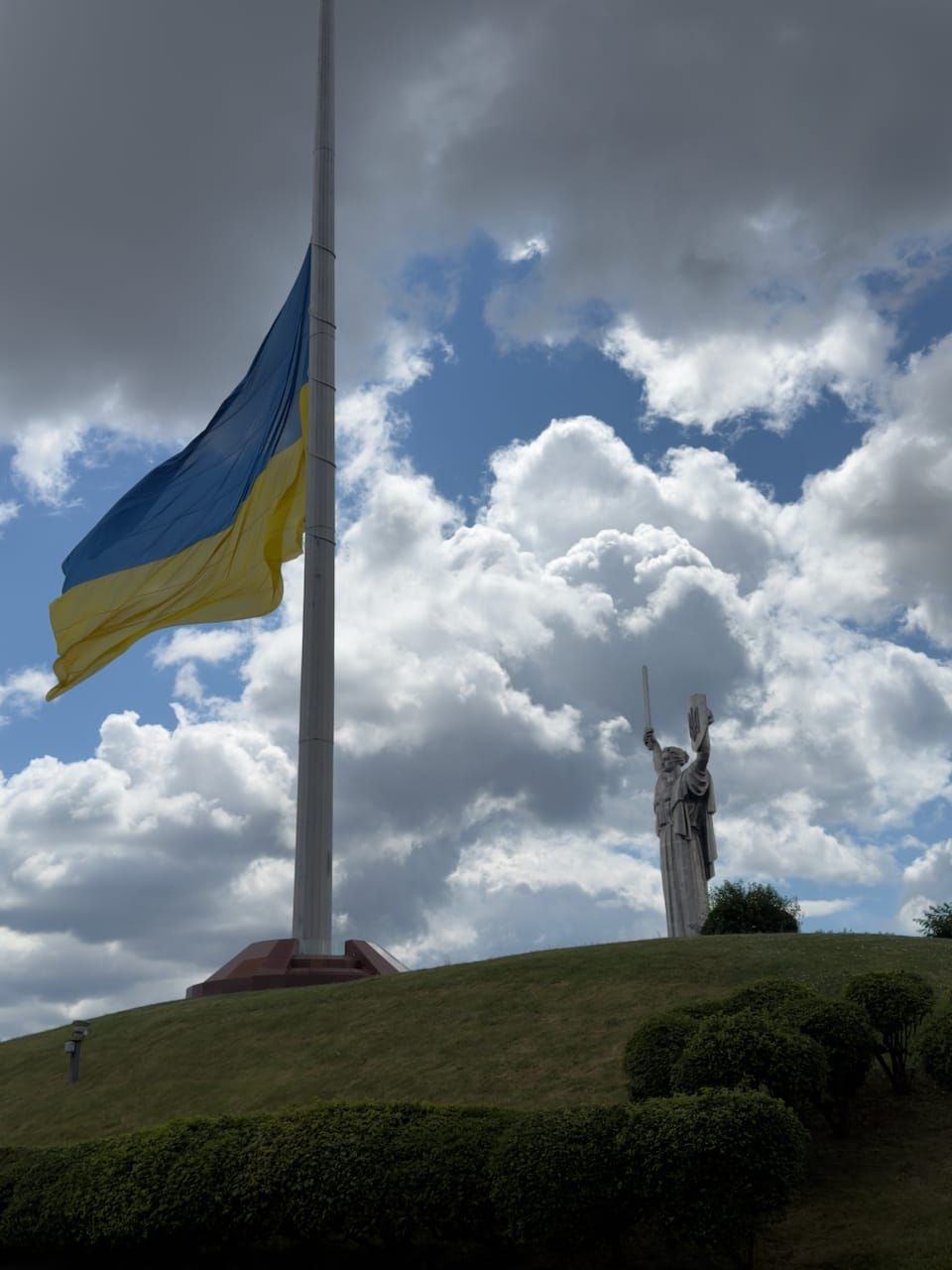
I was in Kyiv last week. On the night of 5–6 July 2026, Russia launched one of the largest attacks on the city since the war began. I spent most of that night in the basement of my hotel.
I'm this experience down it down because it was a first for me, and because it is not a first for anybody who lives there. In more than four years of full-scale war, Ukrainians have done this thousands of times. I did it once. The only thing a first time is good for is that you still notice everything; you haven't yet learned which parts are supposed to be routine.
So this isn't about what it's like to be bombed. It's about what it's like to sit in a basement for five hours with a phone in your hand, waiting for news, feeling the walls of your building shake.
The night
The alarm woke me around midnight, and I went down to the shelter under my hotel in Podil. For a few seconds I debated making a run for the metro station a few blocks away. The metro is much deeper, and it is where people go when they think the night is going to be a bad one. A few blocks is nothing on an ordinary night. I stood there doing the arithmetic — how long to dress, how long down the stairs, how long across the street — and before I finished it the Ukrainian Air Force warned that ballistic missiles were inbound. Ballistic missiles cross that distance in minutes. By then there wasn't time to go anywhere.
Instead, I went down to the shelter in the basement of my hotel. It was a former storage closet that had been lined with cots with blankets. A place of peeling paint and basement damp.
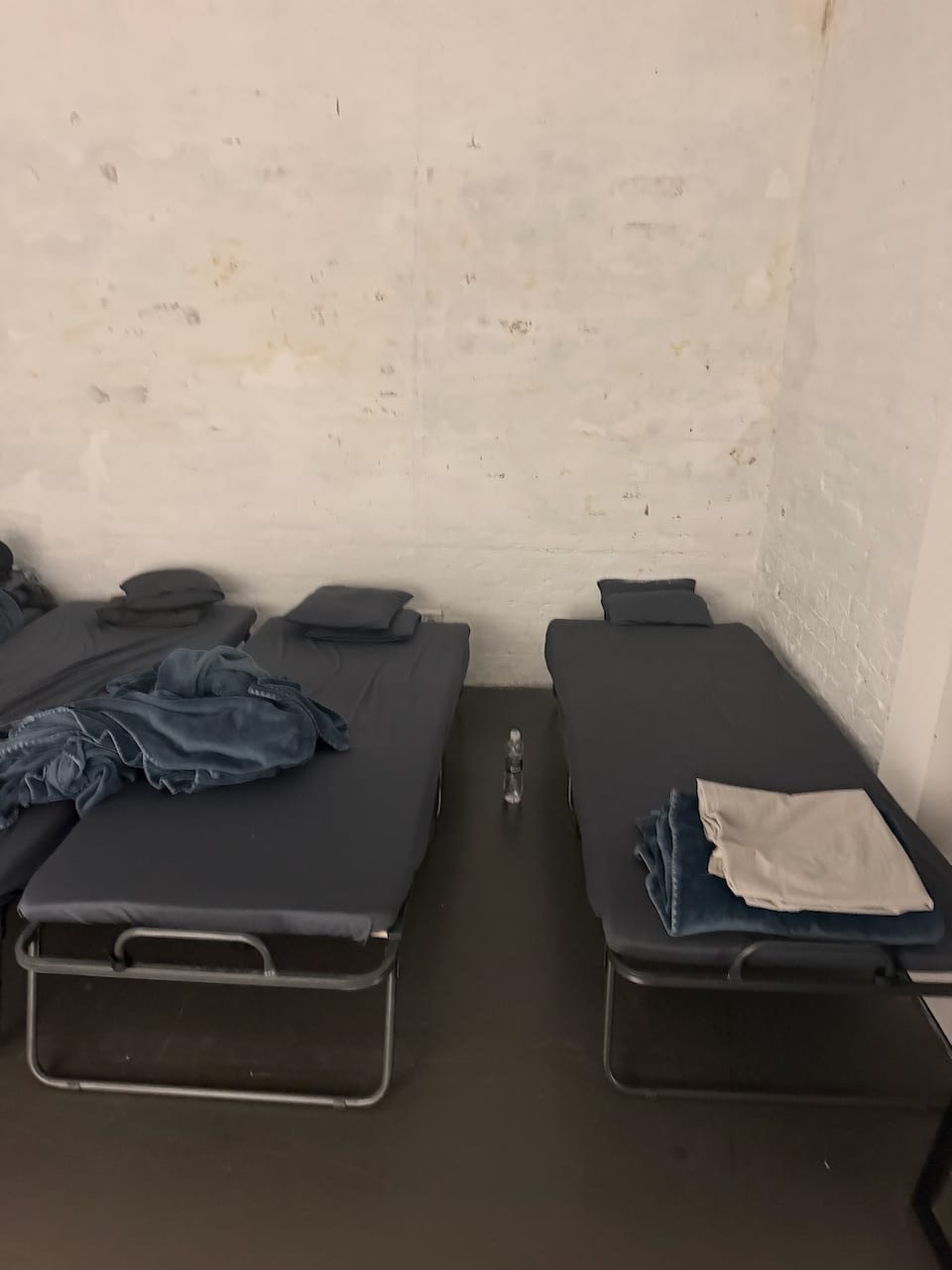
For the next few hours I followed the Air Force's Telegram channel as it tracked hundreds of drones and dozens of missiles moving across the country. The updates come constantly, in a clipped format you learn to read fast: a type, a direction, an oblast, a heading. Every few minutes there was another trajectory, another warning.
I was also following the World Cup. Mexico and England were playing. The shelter had no television, so I refreshed the score on Google between missile trajectories. Drone counts on one tab, a football match on the other, both on the same phone in the same hand.
My hotel was an old brick building with thick walls. Every few minutes the whole structure shuddered from a nearby explosion, and it made almost no sound.
That combination took me a while to understand. The low frequencies — the part of a blast that sits at or below the bottom of human hearing — pass through masonry almost unimpeded, and they arrive as movement rather than noise. The audible range doesn't get through; thick brick absorbs it. So the walls that kept the sound out let the shaking in, and the two came apart from each other.
You could feel the building move without hearing what had moved it.
We spent a lot of the night listening for whatever sounds did make it through, and trying to sort them. Air defense has a signature people learn — a fast run of thuds, one after another, from the same direction. At one point several of us were convinced we'd heard exactly that. It turned out to be someone coming down the stairs into the shelter. We laughed. For a few seconds a room full of people had agreed on what they were hearing, and every one of them had been wrong.
Most of the foreign visitors stayed in the shelter until morning. The Ukrainians came and went. They checked Telegram, read the trajectories, worked out what the next hour was likely to hold, and during the quiet stretches they went back upstairs to sleep in their own beds.
They weren't being reckless. They were doing arithmetic the rest of us didn't know how to do, weighing what was actually overhead against the cost of another night without sleep, in a war that has gone on long enough that sleep is a resource you have to manage. We had no arithmetic. We had one rule, which was to stay put, and we followed it until morning.
Around 3:30 things settled enough that I stretched out on one of the cots and fell asleep. I fell asleep several times, waiting for the next round of ballistic warnings. Every time I woke up there were new texts from friends back home asking if I was okay, and every time my answer was the same. Yeah. Of course I am.
I had no basis whatsoever for that confidence.
Morning
The all-clear came around 5:00, so I grabbed my bags and headed for the train station for the 7 am train to Lviv, nearly 1,000 kilometers away to the West. We had just boarded when another alarm sounded and a train attendant started shouting in Ukrainian: Evacuate yourselves.
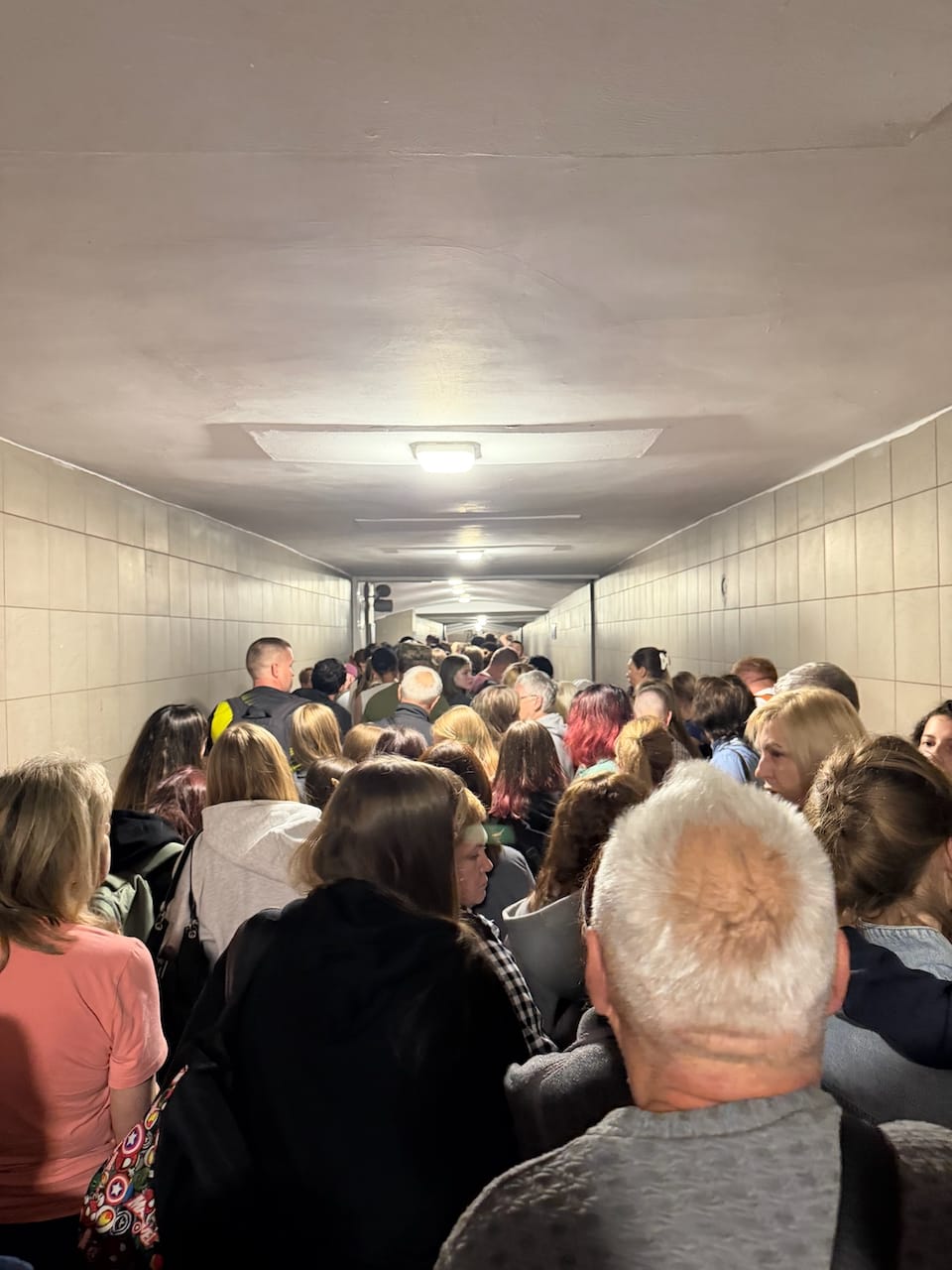
I took my backpack and left my suitcase sitting on the train. Other people took their suitcases with them. They moved us down into the pedestrian tunnel beneath the platforms, and the train pulled away to wait somewhere out of range until the danger passed, so that when we finally came back up it was to a different platform than the one we had left.
I later learnt that there was a drone targeting the train station.
All night I had been texting with Ukrainians I'd met during the trip, and none of us ever said exactly where we were. During an attack you don't post your location, you don't post what you saw, and above all you don't post where something landed or how close it came. Russian forces read the same feeds everyone else does, and confirmation of where a strike hit is how the next one gets corrected. There are public campaigns about this. There are signs.
Nobody explained any of it to me. I picked it up from the shape of the messages: from people who were plainly outside, plainly watching something, describing none of it.
What the photographs were
By the time I reached Lviv, photographs of collapsed apartment buildings in Podil had started to appear. They looked awful, but I was still looking at them the way you look at a disaster: in terms of buildings. Damage, structures, repairs.
Then the death toll started to climb.
Somewhere during the night I had assumed, without ever deciding to, that everyone was doing what I was doing — heading to a shelter, watching the same channel, waiting it out. They weren't.
Many of them had made different choices, built out of years of experience. Some stayed in their apartments. Some sheltered in interior hallways, the old rule about keeping two walls between yourself and the outside. Some decided this alert was no different from the dozens that came before it, because most of the time that is exactly what it is, and because nobody can spend years of nights in a basement.
That was when the buildings stopped being buildings to me. They became the places where those decisions had been made.
The Air Force later reported that Kyiv had been the primary target that night. They intercepted hundreds of drones and nearly every cruise missile. They intercepted none of the ballistic missiles — not one — which finally explained the shaking. What I had felt all night was the shock of ballistic missiles striking neighborhoods around me, one of them a few hundred meters from where I had been sleeping.
Afterward
What unnerves me now is how quickly all of it turned ordinary. Within a couple of hours I had settled into the rhythm of the night. I translated Telegram updates. I refreshed a football score. I wondered whether I'd make my morning train. I tried to work out whether a sound was footsteps or air defense. I fell asleep waiting for the next warning.
That is the part I wouldn't have predicted. Not the fear — I expected the fear. What I didn't expect was how fast the night stopped feeling like an emergency and started feeling like a schedule.
The fear came later.
I want to be careful about what I'm claiming here. I don't know what this is like for Ukrainians. I don't know what it is to do it for years, to have a shelter routine and a bag by the door and a set of decisions already made about which alerts you get up for and which ones you sleep through. I don't know what it is to be doing it tonight, while you read this. I was a visitor with a way out, and I left a war that other people cannot leave.
This was my one night. It was scary.
The thing I keep returning to is the all-clear announcement. The Ukrainian air raid app uses Mark Hamill's voice — he recorded it in 2022 — and it ends the same way every time: "May the Force be with you."
During the night I thought it was a little corny.
I hear it differently now.
That same line has ended thousands of nights in Kyiv, and mine was one of them. Most of the time it means breakfast, work, school, another ordinary day.
Sometimes it doesn't. I think about the people whose phones played it before they walked back into apartment buildings that later collapsed, and about the families who never heard from them again.